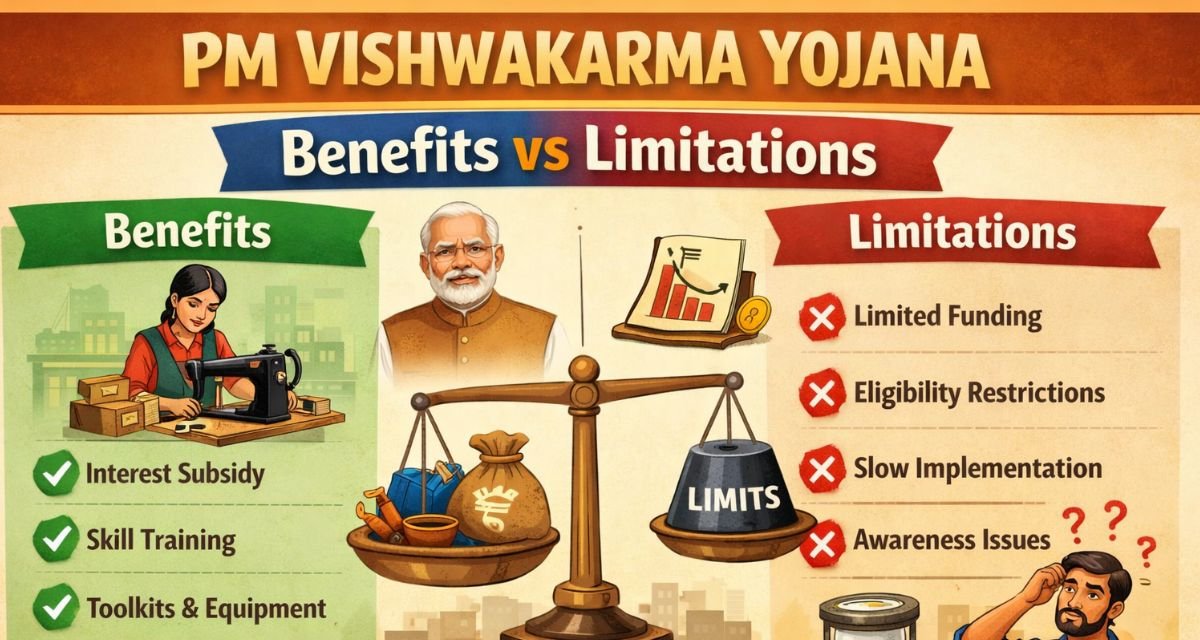
The PM Vishwakarma Yojana is a government program designed to support India’s traditional artisans and craftsmen. Think carpenters, blacksmiths, tailors, potters, barbers, the kind of skilled workers who’ve kept their crafts alive for generations. The thing is, many of them have always faced challenges: not enough money, old tools, and hardly any proper training.
This scheme tries to change that. It gives these workers a real shot at growing their skills, earning more, and running better businesses. Sure, there are lots of upsides, but it isn’t perfect. Knowing both benefits and drawbacks helps people make smarter choices, so let’s break it down.
First up, the advantages:
1. Easy Financial Support
Probably the biggest perk here is simple access to loans. Artisans can grab a first loan of up to ₹1 lakh, then a second one up to ₹2 lakh later. The interest? Just 5%, and you don’t have to cough up a ton of collateral. It’s a relief compared to pricey private loans. Suddenly, that tailor can finally buy a newer sewing machine, or the carpenter can upgrade their toolkit.
2. Skill Training That Pays
The scheme doesn’t stop at just money. It offers training programs to teach modern techniques, sharpen quality, save time, and even handle customers better. Plus, artisans get a daily stipend during training, so they don’t lose out on income while learning. Better skills mean more business and more cash in hand.
3. Extra Boost for Tools
Another nice touch: a toolkit incentive up to ₹15,000. That helps pay for new or better tools. With this, workers finish jobs quicker, make better stuff, and keep customers happier. Even small upgrades can mean real gains for a local craftsman.
4. Digital Payments and Marketing
The scheme nudges artisans to use digital payment systems like UPI or online banking. It just makes it easier to receive money, keep track, and connect with more buyers. On top of that, the government steps in with help for marketing and branding, even online. Suddenly, selling outside the local market doesn’t feel impossible.
5. Recognition and Identity
When you sign up, you get a PM Vishwakarma certificate and ID card. This certificate isn’t just a piece of paper; it gives official recognition, builds trust, and makes it simpler to access more benefits. That extra credibility can really make a difference when you’re trying to get your business off the ground. In the end, the PM Vishwakarma Yojana opens doors for artisans with real support, solid skills, and a push into today’s world. It’s not perfect, but for many, it can be the break they’ve been waiting for.
Practical Limitations
The scheme has its perks, but honestly, it’s got some real obstacles too.
1. Limited Awareness
A lot of artisans, especially out in the countryside, don’t even know this scheme exists. Without proper info, many eligible folks just don’t apply; others get confused by the steps, and the benefits trickle down slowly. What’s really needed are solid awareness campaigns to get everyone in the loop.
2. Documentation Struggles
Getting the paperwork right can trip people up. Things like Aadhaar cards, bank accounts, or mobile numbers linked to Aadhaar and the local verification process can feel like a mountain. Missing documents mean delays, sometimes stretching out approvals for ages.
3. Problems with Training
Training centers aren’t everywhere. If they’re far away, it’s tough. People worry about traveling, wasting time, and extra costs. So, not everyone can actually show up for training.
4. Slow Loan Approvals
Loans are on offer, but the approval process can drag on. That means businesses can’t expand as quickly, folks can’t buy the tools they need, and investment plans get put on hold. When someone needs money right away, that wait hurts.
5. Limited Range of Trades
The scheme only supports a handful of traditional trades. If you’re skilled but not in one of the covered categories, you’re out of luck. Plenty of talented artisans can’t even apply. Opening up to more trades would make the scheme fairer for everyone.
Who Benefits the Most
The PM Vishwakarma Yojana mainly benefits traditional workers and small craftsmen, such as:
- Carpenters
- Blacksmiths
- Tailors
- Potters
- Cobblers
- Barbers
- Goldsmiths
- Basket makers
- Toy makers
- Washermen
- Masons
These workers usually operate small businesses and need financial and skill support.
The scheme is especially helpful for:
- Rural artisans
- Small family businesses
- Self-employed workers
- Low-income craftsmen
- Traditional skill-based workers
These groups benefit the most because they often lack access to bank loans and modern training.
Things to Keep in Mind
Before starting the application process for the PM Vishwakarma Yojana, make sure you’ve thought through a few key things:
1. Check Your Eligibility
You have to be part of a suitable trade, and you must already be working as a traditional artisan or craftsman. Don’t skip this eligibility really is the first step.
2. Get Your Documents Ready
Gather everything you’ll need: your Aadhaar card, bank details, a working mobile number, and proof of address. Having these on hand makes the process go much smoother and spares you last-minute hassles.
3. Take Training Seriously
When you get the chance to attend training, treat it like a real opportunity. Pick up new skills, because these can bump up both your confidence and your income.
4. Use Loans for Your Business
If you receive a loan, treat it as a tool to grow your work. Don’t use the money for personal spending, invest it right back into your craft so you see real progress.
5. Focus on Growth
The whole point of this scheme is to help you expand. So think beyond the basics: work on making your products even better, reach out to new customers, try digital payments, and explore fresh markets. You’ll get the most out of the scheme if you really lean into business growth.
Final Thoughts
The PM Vishwakarma Yojana gives traditional artisans and craftsmen a shot at something bigger: financial support, better tools, meaningful training, and access to new markets. These benefits can give you a real lift, making it possible to earn more and build a steady livelihood.
Of course, there are still challenges. Some people don’t know about the scheme at all, while others hit snags with paperwork or can’t find good training nearby. But with stronger outreach and smoother processes, these roadblocks can be fixed.
All things considered, this scheme offers a genuine boost for small artisans and those working in traditional trades. When people get informed and really take part, the Yojana doesn’t just protect old skills; it opens up new opportunities and helps small businesses thrive. It’s not just about individuals; it’s about supporting India’s entire culture of craftsmanship.